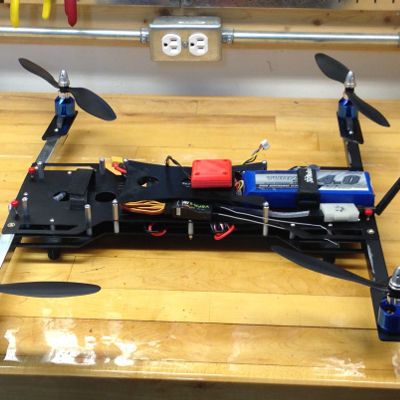
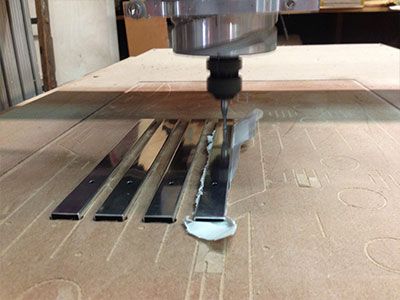
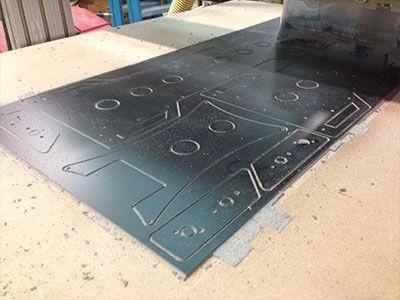
Diese Fallstudie befasst sich mit einem weiteren Projekt des vielseitigen Michael Castor, der bereits das Pi-Pad entwickelte, das wir letzten Monat vorgestellt haben. In diesem Artikel konzentrieren wir uns auf einen fliegenden Quadcopter, den er mit Aspire und seiner selbstgebauten CNC-Maschine konstruierte. Zunächst erklärt er, wie der Bedarf für dieses Projekt entstand.
“Drones are an addiction. You start with something small to learn on, then move on to something bigger like a 3D robotics drone. You build it, you fly it, and it’s awesome. Then you crash it and turn your $600 quadcopter into a an unrecognisable pile of parts. At least that’s what happened to me…”
Having crashed the drone on the test flight Michael took the wreckage home and examined damage. Having turned the airframe into a tangled spaghetti type mess of fibreglass and aluminium he was surprised at the fact the majority of the electronic survived. Still with a fully functional APM (autopilot unit) with a nice crack in the case a perfectly working gopro with another shattered case and two completely broken motors, Michael decided to dust off the salvaged parts and try again.Wie Michael es ausdrückte: „Was hochfliegt, muss auch wieder runterkommen, und was runterkommt, kann manchmal wieder hochfliegen.“ Nach einem großartigen Testflug über die Dächer hinweg und einer ziemlich turbulenten Landung hieß es für Michael also zurück an den Zeichentisch. Sein Ziel: die Maker Faire in New York 2013.

Vectric Ltd
Precision House
2 Arden Road
Alcester
B49 6HN
Eingetragen in England unter der Nummer 05382596
Umsatzsteuer-Identifikationsnummer GB115123072
Datenschutzerklärung |
Cookie-Richtlinie |
Allgemeine Geschäftsbedingungen



