For Tim, woodworking has been a lifelong hobby and passion and the decision to incorporate CNC technology within his well-equipped shop was seen by Tim as a natural progression.
Tim invirtió en su máquina CNC Shopbot hace 8 años y pronto necesitó un software de diseño más sofisticado para abordar los proyectos que quería emprender. Sin embargo, se sintió decepcionado por la falta de opciones en el mercado, especialmente en lo que respecta al precio, como explica:
“No podía justificar gastar más dinero en software que lo que costó la máquina en su totalidad”.
Afortunadamente, Tim no tuvo que esperar mucho, ya que Vectric pronto lanzaría su primer producto, 'VCarve Wizard' (ahora VCarve Pro);
“Entonces apareció Vectric con su software inicial V-Carve Wizard y todo cambió para mí. Desde entonces, he ido avanzando con sus productos y actualmente uso Aspire para todo”.
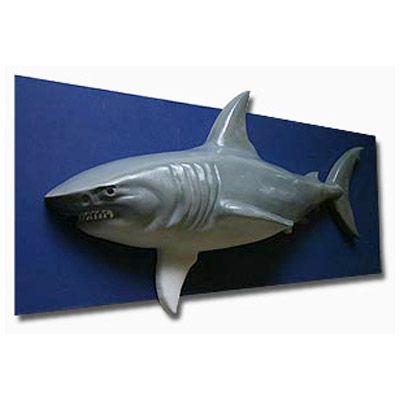
Desde que actualizó a Aspire, Tim ha podido emprender proyectos cada vez más interesantes, ¡tanto para el trabajo como para divertirse! Este estudio de caso se centra en esto último y analiza cómo Tim usó Aspire para mecanizar modelos de tiburones en 3D para sus nietos.Inspirado por otro usuario de Vectric que publicó un proyecto de camello navideño en 3D en el foro de Vectric, Tim quiso probar algo similar pero nuevo para él, ya que hasta ahora todo su trabajo había sido terminado de forma natural. Aunque podría haber diseñado y modelado el tiburón desde cero, decidió comprobar si tenía un modelo interesante para usar en su colección de imágenes prediseñadas en 3D de VectorArt3D y encontró su gran tiburón blanco en 3D, ¡sabiendo inmediatamente que a sus dos nietos les encantaría tener uno!
El objetivo de Tim era crear un modelo grande e impresionante que presentaría problemas si se hiciera de madera, especialmente colgado de una pared, así que decidió intentar mecanizarlos en espuma de alta densidad. Quería que fuera grande e imponente, lo que en madera habría creado algo demasiado pesado para colgar en la pared, como explica:
“Necesitaba hacer dos, pero decidí hacer uno primero y ver qué tal salía. Espero poder hacer ambos con una sola lámina de aislamiento de espuma de 4' x 8' x 2" que venden en la ferretería local”.Diseño de piezas y creación de trayectorias de herramienta en Aspire:
Para este proyecto, Tim utilizó la función de segmentación de modelos 3D de Aspire para dividir el tiburón de 1,2 m de largo en cuatro secciones Z de 5 cm de grosor. La imagen de la derecha muestra el diseño inicial y la vista previa de la trayectoria de herramienta para el primer tiburón.
Para asegurar que las piezas se mantuvieran en su lugar durante el mecanizado, Tim decidió incluir orificios de sujeción como parte del diseño para fijar el material a la bancada de la CNC. Estos orificios se mecanizarían primero, por lo que se creó una trayectoria de herramienta de perforación para un tornillo con cabeza de arandela.
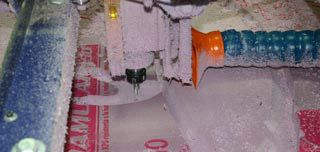
El siguiente paso fue crear la trayectoria de herramienta de desbaste, que eliminó rápidamente grandes cantidades de material sobrante. Después del desbaste, el acabado fue rápido y suave. Tim decidió usar una broca de punta esférica más larga de lo habitual para obtener una mayor holgura en el eje Z.
Acabado y pinturaUna vez finalizado el mecanizado y tras una buena limpieza con aspiradora, llegó el momento del ensamblaje. Para aprovechar los materiales que ya tenía, Tim pegó las capas con pegamento Titebond 3. Sin embargo, tras el primer tiburón, comenzó a usar un método diferente, como explica:
“El pegamento funcionó bien y el tiburón sigue intacto, pero desde entonces he leído que el pegamento puede no secarse en las superficies interiores. Por lo tanto, para los siguientes tiburones, he usado un adhesivo en aerosol 3M y está funcionando de maravilla”.
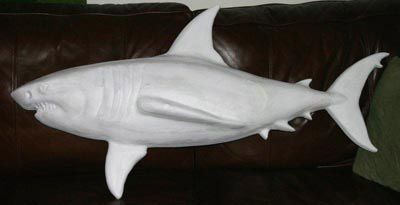
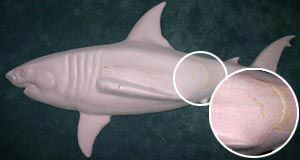
Aquí hay una foto del tiburón ensamblado después de pegar las 4 capas. Tim ahora necesitaba rellenar y dar el acabado final a los bordes y agujeros. Tim explica que el método produjo un excelente acabado con espuma cortada con CNC.“Me resultó más fácil lijar con almohadillas de lijado de esponja. Los granos 60 y 80 funcionaron mejor, y con la base de esponja suave, no eran tan agresivos como indicaría el número de grano. Usé el 60 para dar forma y alisar, seguido de una capa gruesa de imprimación a base de agua de Zinsser. Después de dejar secar la imprimación, lijé todas las superficies con la esponja de lijado de grano 80.”
Para rellenar los pequeños agujeros, Tim mezcló un poco de compuesto para juntas ligero con un poco de agua hasta obtener una consistencia de masa para panqueques y usó una brocha de espuma para cubrir toda la superficie (después de la capa inicial de imprimación).Después de usar una esponja de lijado de grano 80 para producir una superficie lisa y satisfactoria, Tim aplicó una capa final de imprimación a base de agua. Después del secado, toda la superficie recibió un lijado final con una esponja de lijado de grano 120 y finalmente se pintó en gris humo brillante para terminar la parte superior e inferior. Después de un par de capas de gris y blanco, Tim usó un pincel pequeño para terminar el ojo y los dientes con pintura acrílica económica que se encuentra en casi todas partes.
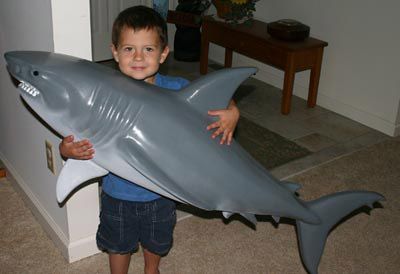
Tim nos dijo que los tiburones fueron bien recibidos por sus nietos;
“El primer tiburón fue para mis dos nietas. Estaban emocionadas, pero ni de lejos tan emocionadas como mi nieto de 2 años y medio. Tardé un rato en conseguir que lo sostuviera para la foto, y no estaba muy emocionado de que le tomaran la foto, pero esto es lo que hace que valga la pena el tiempo y el esfuerzo.”
Para obtener más información sobre el proyecto, lea el hilo completo en el Foro de Vectric >

Vectric Ltd
Precision House
2 Arden Road
Alcester
B49 6HN
Registrado en Inglaterra Número 05382596
Número de IVA GB115123072
Política de privacidad |
Política de cookies |
Términos y condiciones



